Trump's America First: The Return of the Big Stick
By Josué Senat · Port-au-Prince · · 3 min read · Updated 24 April 2026
Translated from French — AI-assisted and reviewed by the editorial team. The French version is authoritative. Read the original · About our translation policy

Traditionally, the first trip of a US Secretary of State follows a well-established ritual: heading to Europe or the major allied G7 powers to reaffirm the strength of transatlantic relations. A mark of continuity, almost a rite of passage. But Marco Rubio chose to break with tradition.
Instead of flying to Paris, London, or Berlin, the head of American diplomacy decided to set down in Central America and the Caribbean. This choice is far from insignificant. This Saturday, February 1st, he will begin his tour in Panama, a country where Beijing's growing influence worries Washington. From there, he will continue his journey to El Salvador, Guatemala, Costa Rica, and the Dominican Republic, with a clear message: China's shadow is extending too close to the American threshold, and the Trump administration intends to respond with a revisited version of the Big Stick.
Behind this trip, it is indeed the specter of Donald Trump's America First that manifests, but with a Rubio twist: a muscular diplomacy, oriented towards the Western Hemisphere, where economic pragmatism mixes with a rhetoric of influence and deterrence. Washington thus reconnects with a more frontal vision of its sphere of influence, in a world where power dynamics play out as much on the commercial as on the geopolitical front.
When Trump and Rubio Resurrect Roosevelt
Early 20th century. Theodore Roosevelt imposed his vision of the world with the Big Stick doctrine – the diplomacy of the big stick. The idea? To make the United States the undisputed policeman of the American continent, with interventionism as a lever and regional stability as a pretext. A century later, this same Big Stick resurfaces in a modernized form, tinged with America First and hostility towards China.
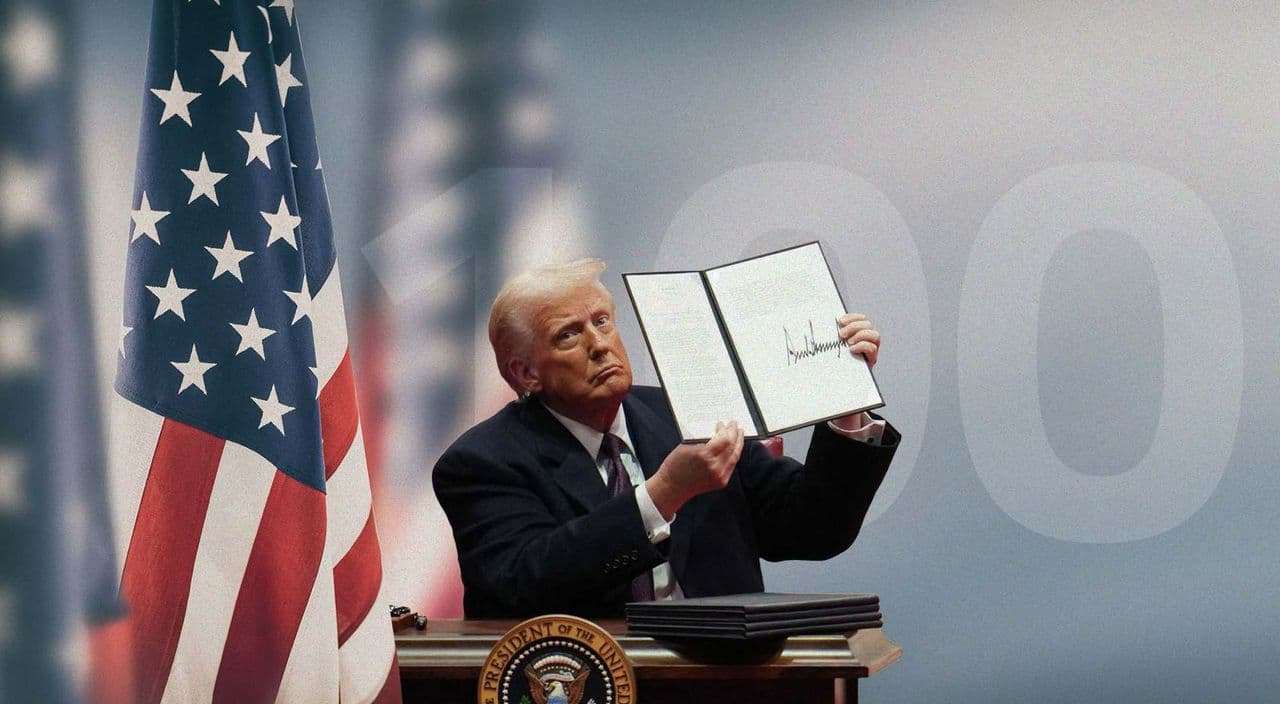
One of the first targets of this muscular stance? The Panama Canal. Since entering the White House, Donald Trump has brandished the threat of taking control of the strategic passage, citing growing Chinese influence. When asked about the possibility of military intervention, he dodges, leaving ambiguity. His Secretary of State, Marco Rubio, does nothing to reassure. In an interview with SiriusXM, he announced: “I think we will see a safer American continent emerge, and our interests in the Panama Canal will be more secure.” A statement that speaks volumes about Washington's new posture in the region. But in Trump's America, a “safer” continent is not just about increased control of strategic routes. It is also a sealed southern border and a Central America free from Chinese influence. El Salvador, Guatemala, Costa Rica: all countries that fuel the migratory flow towards the United States and find themselves in the crosshairs of the new administration. Upon taking office, Trump launched a vast operation of mass expulsions, reminding these states of their economic dependence on Washington. A clear message: they have every interest in strengthening their partnership with the United States if they want to avoid the wrath of the Big Stick. Trump's America First is not just economic nationalism. It is also a diplomacy of confrontation, mixing interventionism and unilateralism. Since his inauguration, the American president has wielded the tariff threat as a weapon: 10%, 20%, 25%… Even Canada, a historical ally, is not spared. So for the countries of the region, the choice is simple: align with the Trumpian vision of the Americas or prepare to taste the stick. Josué Sénat
M.A Political Scientist, Internationalist.
Early 20th century. Theodore Roosevelt imposed his vision of the world with the Big Stick doctrine – the diplomacy of the big stick. The idea? To make the United States the undisputed policeman of the American continent, with interventionism as a lever and regional stability as a pretext. A century later, this same Big Stick resurfaces in a modernized form, tinged with America First and hostility towards China.
One of the first targets of this muscular stance? The Panama Canal. Since entering the White House, Donald Trump has brandished the threat of taking control of the strategic passage, citing growing Chinese influence. When asked about the possibility of military intervention, he dodges, leaving ambiguity. His Secretary of State, Marco Rubio, does nothing to reassure. In an interview with SiriusXM, he announced: “I think we will see a safer American continent emerge, and our interests in the Panama Canal will be more secure.” A statement that speaks volumes about Washington's new posture in the region. But in Trump's America, a “safer” continent is not just about increased control of strategic routes. It is also a sealed southern border and a Central America free from Chinese influence. El Salvador, Guatemala, Costa Rica: all countries that fuel the migratory flow towards the United States and find themselves in the crosshairs of the new administration. Upon taking office, Trump launched a vast operation of mass expulsions, reminding these states of their economic dependence on Washington. A clear message: they have every interest in strengthening their partnership with the United States if they want to avoid the wrath of the Big Stick. Trump's America First is not just economic nationalism. It is also a diplomacy of confrontation, mixing interventionism and unilateralism. Since his inauguration, the American president has wielded the tariff threat as a weapon: 10%, 20%, 25%… Even Canada, a historical ally, is not spared. So for the countries of the region, the choice is simple: align with the Trumpian vision of the Americas or prepare to taste the stick. Josué Sénat
M.A Political Scientist, Internationalist.